Showing posts with label Manifestos. Show all posts

Wednesday, 10 November 2021

Visionary Or Nothing

I reach the real through the dream. I invent you reality.
- Clarice 'Hurricane Clarice' Lispector

 Writing poetry is not about language any more than taking a bath is about plumbing….So, galvanised, I write, splintering certain words across blank pages of empty space: why?

Academic and other definitions of poetry as ‘literature’ displace the act of poetic creation from the interior psycho-biological universe to an epiphenomenal world of cultural-linguistic constructs where ‘communication’ is all.

Do I write poetry to communicate? No.

Is my poetry a spiritual exercise? No.

Nietzsche and Wittgenstein, in their different ways, consigned metaphysics to oblivion. What has this to do with me? Everything.

Does this mean that only language remains? No.

I will never concede that poetry is literature. The cultural-linguistic paradigm presupposes that everything depends on language to the extent that Being is literally indefinable in extra-linguistic terms: very convenient – if you are a linguist, a post-modernist - or a plumber. Yet, as we all know, 'the map is not the territory' (Korzybski). 

I know my creativity is an innate psycho-active phenomenon. The raison d’etre of my paradigm is transformation, the ‘circumstantial-magical’ convulsion caused by that particular Beauty, ‘the only beauty that should concern us’ (the enigmatic sphinx, the marvelous precipitate of the ancient alchemists) invoked by the transformation of despised prime matter into pure aesthetic gold. Fantastic? Romantic? Symbolist? Surreal? Pop? Subtopian Materialism? But, of course!

The raw material of creation, rather like a chance encounter in the street, is not so much language but me as poet, my ego and all: and the essence of poetic practice is active imagination, even though it is through language that we unleash the vision thing from another world. It is inevitable that poets, in pursuit of inspiration, will engage, in some way or other, with all those innate processes of inner integration, those ‘inner workings’ that surely exist. From this perspective the poem itself may appear a by-product of the procedure; an exercise in therapy, propaganda or, let’s face it, pure entertainment. Take it or leave it.

For me, as I penetrate the archaic heritage, that archetypal forest of symbols; it is the compulsive activity of inspiration arising from the process of self-discovery that is the prime factor: it is this that dissolves those artificial barriers between fact and fiction, between sleep and waking, between dream and reality, between consciousness and the unconscious, between inner and outer space… Thus the poem is quasi-autonomous; it partakes of the de-familiarizing power of symbolic Otherness. Is it too late to get unreal?

Grounding poetic practice in the ontological matrix dissociates ‘pure poetry’ from the cultural-linguistic, epiphenomenal foreground of ‘literary’ discourse, from the dreary, enervating world of career-writers and fake self-referential experimentalists obsessed with brownie-points and prizes.

I know that unilateral engagement on an aesthetic basis with the principium individuationis does not accord with traditional models of perfectibility or divine purpose; perhaps it can be seen as a promethean affront to the established order, or as a way of repossessing everything that has been expropriated (that is to say, stolen from us) by agents of the Mysterium. This is not some kind of spiritual exercise but a way of accessing, as a psychonaut, the mythopoeic domain, the Enchanter’s Domain: a neo-shamanistic anti-quest that is certainly the very antithesis of enlightenment and salvation. Oh, yes, I know I am a spiritual flaneur, a damned poet and (eye roll) a ‘lost’ soul.

To be damned is to be modern, absolutely modern; and to be modern is to be utterly damned once and for all. The human condition evolves too fast or not fast enough, yet the horizon of change is Fear, and the closer we are to the horizon the less we care about rhyme or reason: blank verse for a blank generation. Eye roll and U bend. And that is why.

Revised version of an article from Stride Magazine, 2002

Illus: Visionary Or Nothing II, 2009

Wednesday, 6 April 2016

Second Highway III

Notes from the Neo-Underground


...from all these things I extracted the quintessence. The filth you gave me I have turned to gold. - Baudelaire

Anti-Gravitas
Gravitas is always the problem, never the solution. ‘… the principle result of existential psychoanalysis must be to make us repudiate the spirit of seriousness.’ – Jean-Paul Sartre 
I realised that insouciance is the one thing that can provide inspiration for our lives and yet have no argument to offer in its own defence – Francoise Sagan
Automatism
‘An ‘automatic’ scribble of twisting and interlacing lines permits the germ of idea in the subconscious mind to express, or at least suggest itself to the consciousness.’ – Spare & Carter. It was this principle that Leonardo advocated in his use of that semi-legendary ‘old wall covered with dirt’ or the odd appearance of certain streaked stones, and which Max Ernst later incorporated into his decalcomania idea of ‘inspiration to order’.
British Values
It is a paradox that Britain has engendered many precursors of Surrealism, from Cyril Tourneur to Lewis Carroll (by way of Swift, Blake, Coleridge, The Bronte Sisters, the Gothic novel and the 'mirth and marvels' of the Ingoldsby Legends) and yet very few self-defined Surrealists in the contemporary sense. Despite a dimension of subversive fantasy, a ‘tendency to irrationality’ in English art and literature, and in popular culture generally (Fred Karno's Army, The Whitehall Follies, Round The Horne, Carry On films, Union Jack knickers, farcical sex scandals) it is clearly the case that movements such as Surrealism remain ‘foreign’, indeed maladjusted, when transposed to the British context. ‘You know, it's just not cricket', as they say in the 'modern rustic' kitchens of Middle England.
But Is It Art?
We all know about Style, Content and Genre, the work of Schools, Movements and the historical culture, but what is the purpose of art? The purpose of any work of art is threefold: of course, there are differing degrees of emphasis, but the function of artistic activity is always Therapeutic, and its main purpose is either Propaganda or Entertainment or both. Therapy, Propaganda, Entertainment - look no further.
Convulsion
Please try to forget, if you can, those heretical convulsionnaires, dismissed by Diderot as ‘a sect of fools’, defined by experts of the day as an unfortunate by-product of dysfunctional gynecology or of the 'moral inferiority' of women. A line of argument continued in 1853 by Matthew Arnold when he described Charlotte Bronte's Villette as 'hideous, undelightful, convulsed'. More profitably, consider Baudelaire's view when he said inspiration ‘has something in common with a convulsion’ and noted further that all sublime thought is ‘accompanied by a more or less violent nervous shock which has its repercussions at the very core of the brain.’ 'Beauty' said Andre Breton, 'is like a train that ceaselessly roars out of the Gare de Lyon and which I know will never leave... it consists of jolts and shocks many of which do not have much importance, but which we know are determined to produce one shock which does.' The constitutive qualities of ‘convulsion’ may be detected in the oneiric aura of Paquita Valdes, as described by Balzac in La Fille aux Yeux d’Or (1835). He wrote: ‘there was something sombre, mysterious, sweet, tender, constrained and expansive, an intermingling of the awful and the celestial, of paradise and hell…’ Again can there be a more convulsive moment than those lines written in 1845 by the 'titanic' Emily Bronte at the age of 27? 'Winds take a pensive tone, and stars a tender fire/ And visions rise and change, that kill me with desire.' Further, consider this landscape from Flaubert's Salammbo: 'An immense mass of shadow lay spread out before them, containing vague crests that looked like the gigantic waves of a petrified black ocean.'  A more recent example, ladies and gentlemen, may be the uptempo classy yet anarchic 1960 mambo-cha interpretation of Artie Shaw's popular wartime hit Frenesi by the Edmundo Ros Orchestra with vocals by Caterina Valente; perhaps the ideal soundtrack of convulsive beauty on account of a predominant sense of ‘apparent gratuitousness’ (Breton). It was Garcia Lorca who reminded us that it is not a matter of theatrical intonation, dynamic vocal flourishes, skill or virtuosity (without question in this case), 'but of a style that's truly alive.' Just like a little girl the poet saw in Puerto de Santa Maria singing and dancing a 'corny Italian song... with such rhythms. silences and intention...' that 'she turned the Neopolitan gewgaw into something new and totally unprecedented...' She has duende! Convulsive Beauty is paradise deranged.  
Culture
Culture is tyranny. Enculturation and cultural baggage retard society.
Cultural Seismology
Beneath the outer ideological layer lies a subsurface region called the ‘mantle’ or cultural interior: a complex yet unstable force field of primal values imposed through structural violence. This structural violence is the immediate cause of surface instability leading to shifts and displacements of the cultural landscape. Cultural Seismology is the 'attempt to record the shifts and displacements of sensibility that regularly occur in the history of art and literature' - Bradbury & McFarlane.
Cyber-Junk Style (Cyber-trash)
Subtopian Materialism meets classic B-Movie Sci-Fi in cyberspace littered with cosmic debris. Like techno-eschatology. Well, sort of.
Didacticism?
No thanks. It's art-for-art's-sake, innit
Doubt
Doubt is freedom.
L'esthetique Baudelairienne
The marvelous envelopes and saturates us like the atmosphere; but we fail to see it. - The Salon of 1846.
Beauty always has an element of strangeness... a certain degree of strangeness, of simple, unintended, unconscious strangeness... - The Universal Exhibition of 1855
From all these things I extracted the quintessence. The mud you gave me I have turned to gold. - Draft for an Epilogue for the 2nd Edition of Les Fleus du Mal.
Exi-Noir Underground Style
Black, always black. Like Niccolo Paganini, the original Man in Black or Les Habits Noirs, via the Velvet Undergound.
Remarquez bien que l'habit noir... - Baudelaire, The Salon of 1846, XVIII On the Heroism of Modern Life
Existence
The horizon of existence is untranscendable.
Fashion
Fashion will be discussed according to the gravitation of white letters on nocturnal flesh. - La Revolution Surrealiste
The trick is not any one outrageous item, but in a combination and juxtaposition which is fashionably perverse.
- Mary Quant. 
Fear of the Dark
A Modernist tendency to reject subjectivist forms and movements such as Confessional Poetry, the workings of the Lyric Ego and Romantic Individualism more generally.  Fear of the Dark is a phobic fear of apparent introversion sometimes disguised as a moral argument, of ascetic origin, against ‘self indulgence’, 'egotism' the 'worship of false gods' or ‘ivory tower’ aestheticism. Fear of the Dark is a fear of the psychic depths, fear of the uncanny, fear of the Shadow and the shadow world, fear of the dark-side, Critics who suffer from Fear of the Dark tend to privilege the Apollonian over the Dionysian, the abstract over the figurative and the Classic over the Romantic. At the same time they promote high-brow ideas of elevated taste, great traditions and cultural superiority. This fear can be projected onto the products of consumer society, mass entertainment and mass production, often treated with disdain, derided as Kitsch or denigrated as decadence or even idolatry. Radical nonconformists may well feel they are on an iconoclastic mission to cleanse the world of distracting images and the seductive products of the imagination. However, as Jung says, the Shadow 'cannot be argued out of existence or rationalized into harmlessness'. Furthermore, this fear can be transformed into hatred because it reminds us of our 'helplessness and ineffectuality' in the face of the unknown and the indifference of Nature, an existential theme portrayed by Byron in his poem 'Darkness' (1817). Hence the zealotry of puritans, driven by the 'horror of great darkness' that afflicted Abraham, the prototypical 'God Fearing Man', in Genesis 12 - Fear of the Dark inflated by apocalyptic amplification.
Forbidden Territory
‘…let us not lose sight of the fact that the idea of Surrealism aims quite simply at the total recovery of our psychic force by a means which is nothing other than the dizzying descent into ourselves, the systematic illumination of hidden places and the progressive darkening of other places, the perpetual excursion into the midst of forbidden territory…’ – Second Manifesto of Surrealism.
Freedom
'The mere word 'freedom' is the only one that still excites me' - Manifesto of Surrealism, 1924. But what is freedom? Freedom is the absence of tyranny. Simple.
Hyper-Culture
After the ‘modern breakthrough’ of the period between 1850 and 1870 the idea of Modernity denoted a permanent transfiguration of the human condition. Yet, in retrospect it seems that this ‘modern’ culture was but a short transition phase between the speedy evaporation of traditional culture and the emergence of another globalised cultural formation. The looming ontological hyper-real collapse of the distinction between ‘reality’ and ‘fantasy’ has given rise to a new trans-national culture – hyper-culture. By the end of the last century the US had been defined as a hyper-power with full spectrum dominance, while the features of mass hyper-culture (emerging in the 1960s and 1970s) were becoming increasingly apparent: on the street the difference between fashionable and unfashionable was becoming more and more difficult to distinguish; ‘authenticity’ was becoming an obsolete concept; gender differences were getting hazy; so-called  post-modernism became an obsessive academic fad with multiple meanings both progressive and reactionary at the same time; Dada opposition to the ‘official’ avant garde became an all-pervasive trend; the elements of technoculture (post-biological-cyborg-biotech-virtuality-cyberdelia-fractal transmutationism) started to mutate with increasing speed of pace in a post-Future Shock landscape where Communist graphics fused with Space Invaders and gave birth to a new divinity: a super secular, Art Deco-gone-Pop-Flapper-Girl-Dolly-Bird waving a Sistine Chapel umbrella.
The Infinite
The objective of Surrealism, said Anna Balakian, was 'the infinite expansion of reality'. But what is the infinite? The infinite, she wrote, is 'the realm at whose borders our faculties fail.'   
Inner Space
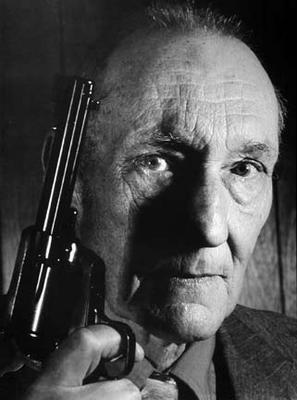
We might note various use of the term ‘inner space’, ranging from the theology of the soul (Augustine) to the assertion (by Rorty) that the mind as ‘inner space’ is a misleading invention of Descartes. Novalis famously said in his Notes for a Romantic Encyclopaedia that ‘Time is inner space – Space is external time’, while Hegel claimed that ‘inner space and inner time’ comprise the psychic environment of poetry. It has been observed that the protagonists in the macabre tales of Edgar Allan Poe inhabit a godless anti-world which is an internalisation of the physical space of the entire American Continent, a space where the borderline between sanity and madness is a new frontier. In 1914, in a letter to Lou Andreas Salome, the poet Rilke claimed that the flight of a bird ‘turns the whole world into inner space’, an experience transmuted into a poem known as the Weltinnenraum Poem. Heidegger said that inner space is ‘the interior of uncustomary consciousness…beyond the arithmetic of calculation…’. In popular culture the term was first introduced at Worldcon 6 in July 1948 by Robert Bloch who said that in Science Fiction the ‘exploration of outer space must eventually give way to an exploration of inner space’, a challenge reiterated by J B Priestly in 1953 and J G Ballard in 1962. Talking about the future of the novel William Burroughs defined himself as a ‘cosmonaut of inner space’, attributing the phrase to Alexander Trocchi. Finally one might recall that Maurice Nadeau described the 'surrealist state of mind' as eternal, and should be understood as a tendency 'not to transcend but to penetrate reality...'
The Jet Age
An uncanny era when Comets mysteriously fell from the sky and the Jet Set flew Pan Am between NYC and Paris to a bossa nova soundtrack. The age of Populuxe Jet Age Moderne architecture, retro-futurism, supersonic research and Chuck Yaeger broke the sound barrier flying the Bel X-1 named Glamorous Glennis. 
The Kaleidoscope Principle
‘One instant leads me numbly to the next and the athematic theme unfurls without a plan but geometric like the successive shapes in a kaleidoscope.’ – Clarice Lispector
Neo-Underground
The Fourth Wave is sometimes termed the ‘Neo-underground’ – Where it’s at.
Non-conformism
For Surrealists non-conformism is total. Most ‘radicals’, however, are non-conformists in a very parochial sense: they are immersed in the protest culture and feel engaged in a high-minded struggle against ‘the establishment’. Our English dissenters like to think they are ‘more radical than the radicals’ even though in actuality they are merely acting-out a pre-determined role; a particularly entrenched mode of the spirit of seriousness, tolerated as a ‘safety valve’ by the very establishment they claim to oppose. The anti-establishmentarian Malcontent stance is usually an affectation of privileged, if disaffected, middle class youth: 'poor little rich kids' with low self-esteem, offspring of The Golden Age of Capitalism. These are the Radical Chic conformist non-conformists, the illiberal liberals, the belligerent pacifists, the authoritarian libertarians, the full time oppositionists, the anti-racist racists, the anti-elitist elitists, the Banbury Saints, the neo-phobic New Age counter-culturalists, the dystopian-utopian anarchists, the unfunny alternative comedians, the repressive multi-culturalists, the anti-feminine feminists (pro-natalist, anti-sexist puritans), the conspiratorial conspiracy theorists, Angry Young Men, refuseniks, iconoclasts (campaigners against 'graven images' and idolatry), dissenters, Levellers, Ranters, Diggers, subversives, hyper-active activists, right-thinking bien pensants and dissidents of all tribes, classes and types - they all aspire to sainthood in conformance with traditional, reactionary, ascetic ideals of goodness and 'virtue' or the received wisdom of heretics. As a character in Look Back in Anger said of that prototype political post-war era antihero Jimmy Porter: 'He doesn't know where he is, or where he's going. He'll never do anything, and he'll never amount to anything.' Sometimes the nonconformist can 'make a difference', but, more often than not, the 'difference' is an outcome of the law of unintended consequences.
Objective Chance
‘…in which natural necessity makes its way through the unconscious to coincide with the human necessity of desire’ – Gerard Legrand (in Ades et al). Objective chance is an occupational hazard.
The Ocean Chart
The Bellman, leader of the Snark Hunt, bought out a large map representing the sea 'without the least vestige of land'. The microcosmic crew were of course delighted 'when they found it to be/ A map they could all understand.'
Open Realism
Open Realism (realisme ouvert – Andre Breton) draws a line in the sand and, as they say these days, it ‘moves on’. From Kitchen Sink and Swinging Bonkbusters to Hammer Horror… nothing is sacred.
The Outland Country
‘He found himself, as he had hoped, afar and forlorn; he had strayed into outland and occult territory.’ – Arthur Machen. The Hill of Dreams, 1907
Paraxis
‘The paraxial area could be taken to represent the spectral region of the fantastic, whose imaginary world is neither entirely ‘real’…nor entirely ‘unreal’…but is located somewhere indeterminately between the two.’ – Rosemary Jackson.
Postsurrealism
The idea of a 'typical post-Surrealist viewpoint' is mentioned by Lucy R Lippard in her discussion of the art of Valerio Adami, a body of work, focused on the principle of metamorphosis, that also draws upon the world of advertising. To quote Adami himself: advertising is 'a language that assails you wherever you go'. He said his aim was to realise a condition where 'time and space spread out into a new psychic action'. Writing about the later films of Luis Bunuel a filmmaker whose aesthetic was rooted in the classic or ‘heroic’ interwar era of Surrealist provocation, Michael Wood observes a certain character pertaining to Bunuel’s work of his later period (1967-1977) or to the social context depicted therein. He notes that this mode of modernity appears ‘thoroughly pleased with itself’ and capable of the ‘firmest suppression’ of any indications of trouble. Crucially, he says ‘This is a world beyond satire, and the old disruptions of Surrealism are not going to make any mark on it, because ordinary life, in this place, is already as arbitrary and erratic as anything a Surrealist could dream up.’ Are there fundamental problems with Surrealism? Taking into account Sartre's critique of a 'curious enterprise of achieving nothingness through an excess of being' one might also add that there are significant issues with Marxism and Hegelianism, political idealism, music, homophobia, infantile regression, anti-consumerism, Westophobia, Postcolonialism, primitivism and the Orientalist Turn To The East which might situate political Surrealism as a precursor to what is now known as the chic pseudo-radical Reactionary Left although the Surrealist Anti-Stalinist emphasis on Liberty (artistic freedom, personal freedom) remains both fundamental and unique. The Surrealists eventually broke with the communists because they refused to accept Socialist Realism as an article of faith. From our present vantage point we should be able to formulate a 'post-surreal' perspective, countering, or, neutralizing such vexatious and problematic questions.
The Post-War Waves
The First Wave was The Angries, the Second Wave was The Satire Boom, and the Third Wave was The Underground. And after the Underground? The Fourth Wave.
The Psychonauts 
Research paradigm derived from the concept of the Psychoanauts (Psychonauten) first discussed by Ernst Junger in his collection of essays Annaherungen: Drogen und Rausch (1970). The term has subsequently been popularised in the occult world by Peter J Carroll in his book Liber Null and Psychonaut : An Introduction to Chaos Magic (1982). Immersive exploration of of the psycho-geography of inner space and/or ‘altered states’ is, obviously, the foundational aesthetic experience; to quote Burroughs, ‘altered consciousness, of course, is a writer’s stock in trade. If my consciousness was just completely conventional, no one would be interested enough to read it, right?’ All Surrealists are psychonauts as the principle is clearly implied in the First Surrealist Manifesto which explains that the discoveries of Psychoanalysis provide for the 'human explorer' (l'explorateur humain) to carry his investigations much further than would otherwise be the case, 'authorized as he will henceforth be not to confine himself solely to the most summary realities'. As the Manifesto states, 'It was a question of going back to the sources of poetic imagination and what is more, of remaining there.' This requires a 'great deal of fortitude' especially if the explorer intends to set up his abode 'in these distant regions where everything seems at first so awkward and difficult.' However, to attain this goal it is ultimately a matter of 'the travelers' 'ability to endure'. 
Radar
Poetry is radar.
Religion
Social evolution is secular, All religion is political: all theology is propaganda. All sacred books are fake news, Faith is an addiction, Morality is The Devil's work. Religiosity is mania but Faithwash, like Greenwash, is nevertheless socially expedient. Fideism is the worst kind of faithwash.
Second Highway
Term used by Huysmans with reference to his new artistic formula (Baldick) ; an extension of realistic Naturalism (the 'highway' marked out by Zola) in pursuit of which the novelist should trace a 'parallel road in the air, a second highway reaching out to regions beyond and hereafter...'. Not only was it required to maintain the accurate documentation and precision of detail demanded by the Realists, but it was also necessary to 'sink well-shafts into the soul' and develop  'a spiritual naturalism'. To extract core samples from the depths of the Soul.
Subtopia
To the critical observer it was an anonymous tract of anomic space lacking in distinctive character or ‘spirit of place'; an interstitial ‘middle state neither town nor country’. In hindsight it seems that this ‘Subtopia’ ('inferior place') was an incitement for the imagination; although it might also have been that the bizarre strangeness was not a subjective projection but a discovery – Subtopia is bizarre in itself.
Subtopian Materialism
A debased form of anti-didactic English Pop associated with the ‘cultural desert’ of the urban fringe. A by-product of the post-war economic boom (The Golden Age of Capitalism) Subtopian Materialism finds inspiration in boring or brutalist architecture, electricity substations, deserted allotments, mass consumerism, retro-futurism, all forms of popular entertainment, and the indeterminate, sub-surreal no-place of featureless suburbia - a locale or terrain vague where ‘nothing really happens’. Like The Room described by Cocteau in Les Enfants Terribles, works of Subtopian Materialism
are 'devoid of intellectual content, devoid... of any worldly aim...' reflecting the commercialised, mass-consumerist aestheticism of the mid-twentieth century.
The Subtopian Voyeur (People Watching)
Hang out on the other side of town, navigate the urban phantasmagoria in search of that 'unconscious strangeness' Baudelaire said was the defining element of Beauty. Get immersed in the Freak Show Scene: the fashions, the types, the attitudes: the friendly, the nasty, or the indifferent.
The Space Age
The atomic space age, the age of The Nuclear Dream and technocratic fantasy dressed by Courreges and Cardin.
‘Sometimes I have a feeling I’m an astronaut shot out into space.’ – Federico Fellini.
Tabloid Impressionism
(1) A Neo-Nonsense, absurdist anti-didactic trash aesthetic; a form of post-surreal Urban Alchemy. The principle of Objective Chance applied to the mass media, particularly in its most disreputable aspects where the Spirit of Seriousness is much diminished, or, with luck, completely absent: downmarket advertising, the tabloid press, junk mail, celebrity culture and scandals, tacky TV, mass production movies, porn mags, burlesque fashion and so forth. As Durgnat said, discussing ‘Mute Poetry in the Commercial Cinema’: ‘…academics often ignore or deprecate the popular mythology from which the mass media so often derive their intimacy of resonance with their audience.’
(2) A slangy literary style. A form of verbal slumming or nostalgie de la boue often incorporating found phrases and wacky neologisms from the mass media.
Teleology?
You must be joking. There is no master-plan.
Veronica Lurk
Bonjour Maitresse!

Bibliography
Ades, Dawn et al, The Surrealism Reader, Tate Publishing, 2015
Balakian, Anna, Surrealism Road to the Absolute, Dutton, 1970
Baldick, Robert, The Life of J-K Huysmans, Daedalus, 2006
Ballard, J G, A User’s Guide to the Millennium, Flamingo, 1997
Balzac, Honore de, The Girl with the Golden Eyes, Sphere Books, 1970
Baudelaire, Charles, Selected Writings On Art and Literature, Penguin Books, 1992
Benjamin, Walter, Charles Baudelaire, Verso, 1997
Bradbury, Malcolm/McFarlane, James Modernism 1890-1930, Penguin Books, 1981
Breton, Andre, Manifestos of Surrealism, University Of Michigan, 2007
Breton, Andre, Nadja, Penguin Books, 1999
Burroughs, William S, Word Virus, Flamingo, 1999
Carroll, Lewis, The Hunting of The Snark, The British Library, 2011
Carroll, Peter J, Liber Null and Psychonaut, Samuel Weiser, 1987
Cocteau, Jean, Les Enfants Terribles, Vintage Books, 2011
Durgnat, Raymond, Films and Feelings, MIT Press, 1971
Ernst, Max, Beyond Painting, Wittenborn Schultz, 1948
Fellini, Federico, Fellini on Fellini, Da Capo Press, 1996
Lorca, Federico Garcia, In Search of Duende, New Directions, 2010
Jackson, Rosemary, Fantasy: The Literature of Subversion, Methuen, 1981
Jung, C G, The Archetypes & The Collective Unconscious, RKP, 2000
Lippard, Lucy R, Pop Art, Thames & Hudson, 2001
Lispector, Clarice, Agua Viva, Penguin Books, 2014
Miles, Barry, William Burroughs El Hombre Invisble, Virgin Books, 1993
Miller, Lucasta. The Bronte Myth. Vintage, 2002
Nadeau, Maurice, The History of Surrealism, Penguin Books, 1973
Parnell, Steve, Ian Nairn The Pioneer of Outrage, The Architectural Review, 27 May, 2014
Quant, Mary,The Meaning Of The Mini, Daily Telegraph 18 Oct 1997
Sagan, Francoise, Bonjour Tristesse, Penguin Books, 2013
Sartre, Jean-Paul, Being and Nothingness, Routledge, 2005
Sartre, Jean-Paul, Modern Times, Penguin Books, 2000
Sirius, R U, 21st Century Revolutionary, Fringecore, 1999
Spare, Austin O, The Collected Works, The Sorcerer’s Apprentice, 1982
Watt, Judith (ed) The Penguin Book of Twentieth Century Fashion Writing, Penguin Books, 2000
Wood, Michael, Belle de Jour, BFI, 2005

illus: Beyond Writing, 1975

Tuesday, 3 September 2013

Second Highway II


Second Highway II

The Unique Zero Manifesto (2007)

Arriere la muse academique! - Baudelaire

Welcome to Unique Zero – the negation of everything.
Creativity is a value-neutral process independent of all forms of expression.
Vigorously reject any notion of a generalised or theoretical ‘poetic’.

The creative process is not ‘theoretical’.

The specific technicalities of any art form – poetry, painting, music, sculpture, installation or assemblage – are of secondary interest, even a distraction, when trying to understand the nature of the creative process.

From the perspective of the primal creative processes there are no significant factors associated with specialised techniques derived from different artistic 'disciplines' or methods, including poetry. This is always the case, even though some media/modes/genres/forms are, in the context of overall function, or with regard to the individual temperament of the artist, more suited to purpose than others, depending upon viewpoint. Furthermore, distinctions between 'non representation' and 'abstraction' are invalid: all artworks are, in the first instance, symbolic representations or constructed reifications, even 'found objects', ‘ready-mades’ or 'conceptual' artefacts. Nevertheless, a ‘symbol’ can also be non-figurative (non-objective) and can be described, loosely, as ‘abstract’.

All artworks derive from the personality, the mentality, of the auteur. They are polysemic/polyvalent, symbolic objects having as their primary raison d'être the externalisation, via signification, of the psychological-ontological, infinitely evolving presence/existence of the auteur (author/artist/poet) without whom the 'work' (opus) would not exist and without whom language is meaningless.

The Cultural Milieu


This process of externalisation (trace or trail) takes place within a specific socio-cultural context (or Zeitgeist) that partially shapes the final outcome. It is possible to 'transcend' the socio-cultural context, although it very difficult to do so. The chronotope in the cultural ‘ecosystem’ locates the auteur (poet/artist) in a socio-cultural milieu or contextual mise-en-scene, based on the enforcement of norms within specific social structures such as the class system, caste systems and the means of economic production.

Normative structures, sustained by ideology and belief (participation mystique) are usually experienced as hegemonic and repressive to some degree. Such normative structures are Blake’s 'mind-forg'd manacles' of cultural oppression and structural evil and must be psychologically accommodated through sublimation, the discharge of instinctual energies into non-instinctual, ideologically sanctioned forms of behaviour. A form of false consciousness tending toward narcosis is a by-product of this sublimation mechanism.

On the other hand, the normative ideology (‘culture’) of any social system is also capable of the infinite assimilation of any artefact, however innovative, progressive, recondite, radical, marginal, outrageous or avant-garde. In advanced economies any artefact will also be the inevitable subject of homogenised commodification by the forces of The Market (the Mondrian dress, the Edvard Munch screaming pillow). Cultural oppression works through all those inhibiting, regressive, ideological normalisation effects persistently degrading the chronotope, both locally and globally (law of entropy) in the interest of various authoritarian cultural-spiritual power elites. Such high caste power elites may declare war upon ‘false gods’ and each other, but they are all united by an imperative to criminalize the imagination; alongside dope-fiends, loose women, idolaters and apostates, free thinkers and artists – makers of ‘graven images’ – are the real enemy. The ‘Open Realism’ (realisme ouvert) of the unrestrained imagination, a mode of extreme naturalism encompassing the antinomian syzygy phenomenon of complementarity, works against this perpetual state of dispossession, and works for the nullification of everything; a Unique Zero opposed to the wretched standing joke of rigidified ‘culture’. The unreality of the chronotope ensnares the subject in an infinitely receding hall of distorting mirrors where the conflict between utilitarian austerity and indulgent individualism cannot be recognised as a smoke screen. In this context, artworks can be either transgressive or conformist, although the poetic process is innately transgressive (non-conformist) because all art can induce a de-familiarisation (disclosure) effect perturbing, however weakly, the hegemony of the mainstream and disrupting the inauthentic discourse of ‘idle chatter’ (they call it 'metaphysics').

Even if ultimately inconsequential, even if only an imperceptible ‘shudder’ (frisson nouveau), a perturbation of the chronotope and its normative, cultural signifying systems is a transgression – and all such perturbations or disturbances are taboo. But the ‘purpose’ of the poem/work is exploration and discovery at the edge of zone; to explore the experience of limits, to explore experience off-limits; to discover or probe the borders of the human event horizon; to actualise singularity, the aporetic neither-nor and/or both.

However, the transgressive or conformist nature of any given artwork will also depend upon the worldview (Weltenschauung) of the auteur/poet. The dynamic, dialectical interplay of Weltenschauung and Zeitgeist at a singular point of intersection (auteur-nexus) within the chronotope influences the subject’s sense of identity, even though the chronotope may exist in a perpetual state of flux or emergence (the rigidity of cultural norms notwithstanding). The poetic process itself is a problematic factor with regard to the question of identity and can enter into a state of conflict with the ideological basis of the prevailing Zeitgeist. The subject’s personal Weltenschauung may, in reality, be a form of false consciousness – bad faith, ‘structural evil', meconnaissance or avidya. Interpellation, the mechanism of economic and cultural assimilation, may create an unstable atmospheric ‘I’ (a ‘they-self’ or mirage persona) that is not the same as the subject’s ‘true (real or empirical) self’. Most artefacts are determined by the phantom signature of this ‘mirage persona’, rather than the authentic signature of the artist’s true will, Sontag’s ‘principle of decision’.

These factors impact upon attempts to define an individual style, poetic or authorial ‘voice’ or maniera. Assertions of authorship per se can be compromised if it appears that personal identity is ‘nothing but’ a projection, an ideological/socio-economic ‘construct’ of mass consumer culture, the product of an all-pervasive theocratic hegemony like so-called ‘higher’ culture bedevilled by the self-serving Aristotelian humbug of ‘virtue’ and ‘magnificence’. Alternatively, the mirage persona is often confused with, or can masquerade as, the vulnerable and immature empirical self. Yet, the inauthentic, fragmentary they-self can never be the ‘real’ auteur. 

Inwardness and Poeisis


‘Inspiration’ and ‘talent’ are conventional terms denoting certain mental capabilities and imaginative capacities. Imaginative activity (active imagination) is 'driven' by innate obsessions or fixations with atavistic affinities, possibly of genetic origin. This compulsion, or impulse, finds 'expression' in an exploratory immersion process of 'inwardness' or descent (the dangerous passage, the voyage to the interior, the night sea journey, the quest or anti-quest).

The ‘descent’ or ‘inverse pilgrimage’ (katabasis) is fraught with anxiety, obstacles and difficulties. This experience assumes the character of an ordeal – an ascesis, even – realised through ‘rites of passage’ comprising three known stages: separation – initiation – return. During this process the subject will encounter or confront uncanny horrors and paranoid connections. These terrors may include resurgent atavisms (the phylogenetic inheritance), pathological forces, every form of self-violation (mortificatio) and shadowy, chthonic ‘elementals’ – all characterised by a ubiquitous undertow of archaic nostalgia. The subject is exposed to all the underworld horrors of personal and collective unconscious contents (the 'inferno') and other phantasmagoria – such as tutelary ‘threshold guardians’ – derived, in the final analysis, from psychic formations known as ‘archetypes’.

These ‘archetypes’ (collective representations or 'categories') can be either structures or paradigmatic processes, not just primordial images. Archetypes are not immutable, and naturally-occurring changes at the archetypal level (creation, evolution, decay, extinction) are reflected by corresponding changes in the prevailing Zeitgeist or world order. Phenomena such as cultural implosion, drift, lag, paradigm-mutation and belief-system burn-out (the death of god, the death of art) manifest themselves through collective time/'deep' history (Geschichte) just as pain is ‘referred’ away from an injured site to various other parts of the body. Thus, ‘archetypes’ can, and do, mutate over time. The archetypal level is, naturally, inherently unstable and without foundation.

Phantasmal figures and motifs (the inchoate raw material or massa confusa) arise from a dynamic, unconscious process driven by libido or unbound psychic energy. This inwardness or immersion process discloses the centre of desire (the heart of darkness, the end of the night, the final frontier), a duplicitous ‘inner world’ (inner space) of cosmic cruelty, proto-animistic fetishism, polymorphous perversity, illicit propensities, unrestrained fantasy, iambic scurrility, and primal narcissism, pathological fixations, retrogression and antinomian 'otherness'. Creativity involves both assimilation of this dark-side (the mutant spectres of desire) and psychic de-conditioning (deconstruction) from the effects of cultural-ideological interpellation (belief, ‘spirituality’ and 'metaphysics'). Deconditioning is achieved by immersion in darkness (blackening or noircissement) or, alternatively, by passage through the dark, haunted depths of the ‘enchanted forest’, the legendary wild-wood.

The ‘heart of darkness’, the capricious, macabre and sinister ‘dark-side’, and its shadowy, subconscious strata of involuntary memory (personal/collective) is the first level of the subject’s inner core, an emergent feature of mutable, fluidic, psychic topography derived from the semiotic, proto-symbolic chora (la chora semiotique). However, the phantasmal ‘contents’ of the dark-side derive from both ‘inner’ and ‘outer’ experience: the products of indefinite feedback, everything but the soul. Characterised by the paradoxical, perceptual complementarity of syzygy phenomena (chaos/cosmos, causal/a-causal, subject/object, latent/manifest, light/dark, positive/negative, life/death, psyche/soma, masculine/feminine, self/not-self, fact/fiction, true/false, love/hate, demotic/hieratic, signifier/signified, wave/particle, etc.) the ‘contents’ reflect the indeterminate, bipolar, existential structure of the ‘real’. This is the case, even if there can be no such ‘thing’ as Reality, realism being a quality of understanding.

A primal phenomenon, not sensible or intelligible in itself, the chora semiotique is the universal pre-linguistic precursor ‘matrix realm' (the Platonic ‘receptacle of becoming’, the unus mundus, the quantum vacuum, the anima mundi, the abyssal depths) which underpins all symbolism, language and meaning. It is beyond rational understanding, merging with the ‘sympathetic’ autonomic nervous system and the primeval (visceral) sphere of the ‘old brain’, that proto-sentient, pre-logical ‘reptilian’ and limbic armature of the unconscious anatomy. Creativity consists of a non-verbal, irrational, intuitive, instinctual procedure of imaginative ‘shaping/forming’ or ‘making’ (poeisis) utilising the subject’s entire psyche – although internal incoherence and psychic division always inhibits optimal creative functioning and free plasticity. Phantasmal contents are subjected to a pre-logical transmutation process (khemeia) comprising condensation (metaphor) and displacement (metonymy), articulated through the osmotic interchange of free association (automatism), energised by libido (vis creativa), predicated by differentiation and conditioned by ‘objective chance’.

This process generates a first phase 'work', opus, or artefact, shaped by the gratuitous laws of organic form (deep form) showing how reification becomes representation through metamorphosis. These representations generate, at the level of reader or audience response, an inter-subjective experience, effect or simulation, of ‘significance’, 'meaning' and aesthetic ‘value’ and, almost instantaneously, are co-opted or annexed as vectors of cultural interpellation. 

Invention and Aesthetic Effects


Primal poeisis functions independently of all self-conscious artifice, taste, thematic concerns, genre conventions and artistic method, although form and technique can be conventionalised at the socio-cultural level and always are. Naturally the auteur (poet/artist) will also work self-consciously, simultaneously exercising intellectual ability (ingegno), wit, erudition, virtuosity and acquired capability in the utilisation of all facets of creative technique both ancient and modern, formal and informal: style, structure, and content. Yet, the fortuitous automatism, the non-verbal visuality of primal poeisis will, at all times, suffuse every aspect of the work in hand, including the objective technical factors mentioned.

However the faculty of invention (invenzione), comprising discovery, representation and all modes of reification and transformation (inflections, modifications, recapitulations, transpositions, modulations and permutations), is rooted in the automatic mechanism of the libidinous process.

In its pure state (l'art pour l'art), poetic invention operates surrealistically (sans sujet preconcu) upon, and within, the psyche. It draws an intuitive, elemental ‘spark’ (scintilla) from the encounter between, and/or juxtaposition of, mutually exclusive or distant realities: ‘kitchen-cynic’ naturalism colliding with mythic symbolism, for example, or a weird fusion of pastoral Arcadia and urban inferno.

Invention can draw the same elemental spark from the off-beat, marvellous-uncanny ‘inbetweenness’ properties of ‘alien’, interstitial phenomena; from an erratic oscillation between the trite and original, or historicism and futurism; from an incongruous synthesis of low-tone and grand manner or from an irregular union of preciosity and brutalism. Often tragicomic, sometimes bitter-sweet, invention can endow the ephemeral with gravitas, transmuting the despised and the neglected into high art or high camp, into an underground freak-out (ufo) precipitating a mind-warp (dereglement de tous les sens).

The process may manifest in different rhapsodic ‘poetic’ lyrical, or, alternatively, ‘anti-poetic’, passionless non-lyrical, modalities. Modalities such as melopoeia (‘phonetic’ or ‘musical’) or phanopoeia (‘visual’ or ‘pictorial’) commingle with complimentary modes of functioning such as pathopoeia (working with affective elements such as feeling, mood and emotion, even with estrangement, irony and alienation) or mythopoeia (Euhemerism/mythologisation/mythic parallelism).

The epistemological element of ‘meaning’ (semantic relations, etymology, associations, nuance, denotation and connotation) endows the artefact with communicative properties and linguistic capacities that engage with consciousness and psychosomatic exteriority, acquiring in the process a patina of ‘cultural value’.

Meanwhile, at the level of the chronotope, the subject interacts impressionistically with 'the world ' via an interface conditioned by the multidimensional, dialectical interaction of sensation, Zeitgeist and Weltenschauung. Here, through a dialectical interplay of material forces, events and subjective perceptions (e.g. synchronicity and coincidence), inspirational feedback (friction/irritability) continues to fuel and inform the poetic process on a mundane day-to-day basis. This magic-circumstantial aesthetic redemption of banality enhances intensity of perception and poetic intuition, even if it does not necessarily effect a diminution of existential unease, anxiety or ‘angst’.

To some degree this entire procedure is 'convulsive' (explosive-fixed) insofar as it arises from an energetic spasm, a surreal analogue to geological seismic activity, triggered by ritualistic intercession, in alliance with the pleasure principle. This ‘nervous spasm’ is the climax or consummation (Chymische Hochzeit) of the initial impulse. The degree of convulsive intensity generated by the primary processes is conditioned by the level of intensity inherent in any given creative act or event and also depends on the neurological or mental state and personality of the auteur.

This intensity is manifest as an emotional spark or charge comprising energy quanta of attraction/repulsion energising the artefact at an extremely deep level within its infrastructure. In a specifically poetic context the affective/emotional charge, or cathexis, invests the imagistic, lexical and other structural elements of a work with a quantum of aesthetic 'power', either weak or strong.

The charge will have an enigmatic 'effect' (la sorcellerie evocatoire), even, perhaps, an absurd effect of hilarity – provoked, for instance, by cynicism, burlesque, iambic parody, black humour or the vitriol of corrosive satire – upon both the reader and the writer. This outcome can be heightened in certain cases to the level of a paranormal 'numinous effect' (uncanny intensity of feeling) that is often misrepresented in mystical terms by both poets and readers. This problem arises, for example, in apocalyptic or ‘vatic’ (visionary) art and is often associated with the transcendental view that all art aspires to ‘the condition of music’.

The degree of charge/intensity also determines the transgressive potential of the work on the socio-cultural plane. Furthermore, the exact nature of the ‘uncanny’ effect (das Unheimlich) and/or response in specific instances is infinitely variable, multi-factorial, unpredictable, hallucinatory and indeterminate in conformance with The Uncertainty Principle. Audience or reader-response will be conditioned by, among other factors, individual predisposition, immediate circumstances, state of health, degree of socio-cultural alienation, collective expectations or inhibiting horizons demarcating the phobic, ideological miasma of false consciousness. 

Parapraxis


The open-real ‘lifted horizon’ (epiphany) of de-familiarisation is a consequence of disruption (perturbation or infraction) of the auteur-nexus within the chronotope and, correspondingly, within the psyche. This inter-penetration of the inner and outer worlds of the reader-writer causes a parapraxis or subversive breakdown of normality; a shamanistic ‘break-though in plane’ (a vector, rupture, tear, wound or gateway) disclosing ‘alterity’ (aporia, otherness, surreality, hyper-reality, super-reality, the dis-placed and the dis-located) warping contingent historicity, displacing the distorting mirrors of the hyper-culture. Alterity, in this context, may be defined as the bizarre (or ‘convulsive’) antithesis of false consciousness that embodies the manifest unreality of the prevailing socio-cultural hegemony. De-familiarisation may generate a heterodox mode of ‘open realism’ (disclosure, desacralization) in contradiction to the oppressive unreality (narcosis) of the phenomena of false consciousness and specious ‘identity’ (national identity, social identity, cultural identity). Such phantasmal, collective, consensual mirages of interpellation maintain social and psychological control through denial of the self, ultimately inducing ideological de-realisation (etherealization or dissolution) in the vapours of mystical unreality euphemistically called The Cloud of Unknowing.

Yet, faced with the impossibility of ‘saying’ anything ‘new’, creativity takes its revenge, ruthlessly recycling, plundering or pillaging the phenomenal, theatrical, kaleidoscopic ‘spectacle’ of the world for ‘raw material’. From a position of ‘absolute divergence’, (absolute nonconformism) creativity enhances the autonomous potential of the spontaneous, singular, side-real imagination in a perverse, even tawdry, spirit of panache; a spirit of intransigent opposition, a 'negative dialectic' of contradiction and reverse exegesis, working, always, against the grain, subversively ‘against nature’ (contra naturam). To reduce the eternal to the transient, to transform substance into style, the ‘signature of the artist’s will’ – that is the essence of modernity with its ‘art-house’ experimentalism, with its ‘cool’ cosmopolitan, radical chic, is it not?

Within the chronotope, the falsehood of the subject’s specular mirage persona may be compromised or exposed by aesthetic manipulation of double images, wordplay, rhetorical devices and figures of all kinds including ‘multiple personalities’, alter egos, authorial ‘voices’, poetic ‘masks’ and heteronyms. Similarly the integrity of the poetic process can be jeopardised by self-division and psychic fragmentation. From this perspective ‘impersonality’, or aesthetic distance, is simply one mask among many, just one survival strategy among others equally valid or invalid.

No strategy can be guaranteed, not even Nihilism, Stoicism or Epicureanism. Not even the decadent, dandified insouciance of cultivated dilettantism. Not even the daunting complexities of Post-modern theory – not even the ironies of high camp; not even the mass media glitzkrieg. No, not even the free-floating aestheticism of marginal dispossessed ‘outsiders’ inhabiting ‘unseen’ paraxial, liminal regions of cultural and sub-cultural life.

The creative process has two outcomes: first, an impact at the socio-cultural level, and second, a psychoactive (psychotropic) effect within the psyche of the individual subject.

This 'psycho-activity', this psychedelic epiphany, is an end in itself and the motive for the original creative fixation-compulsion (impetus/impulse). Through feedback this fixation-compulsion evolves into a process of developmental integration, a process of growth-change through ‘altered states’ of lucidity or ‘systematic derangement’ (raisonne deregelement), defined as ‘individuation’.

Often misrepresented in ‘spiritual’ terms and thus neutralised, or blocked, by false consciousness and the devious contents of the mystical mirror-world menagerie or cultural hothouse, individuation is simply the human manifestation of a general drive to entelechy (autarchic self-realisation) common to all living organisms, one aspect of the parabolic arc of the evolutionary process. Artistic activity, as a mode of ontogenic-phylogenic self-actualisation, has an evolutionary function (survival value, realisation of singularity) at the biological, species level.

Enrichment of the anguished existential spectacle; enhanced adaptive capacities; the ‘pataphysical subversion of interpellation in the name of an ‘impossible’, absurd freedom (la liberte absurde); intensification of the contemporaneous, perceptual ‘now’ (the inadvertent lucidity of the ‘sublime moment’, the gem-like flames of synaesthesia); the infinite, ambivalent reinvention of modernity. These are some possible benefits derived from creativity. Others might include the cathartic purgation of ‘spiritual’ accretions, blockages and restrictions impeding psychic integration. However the autonomous imagination is indifferent to such ‘benefits’ and, being neither benign nor malign, its ultimate effect may well be ‘off-centre’, may well induce disarray and further confusion: a sardonic ‘debacle of the intellect’.

The reification and externalisation of the artwork, its conformance to expectations within objective, historical parameters of social exchange, art or anti-art fashions, styles, schools, genres and movements in the fragmentary world of the mirage persona or they-self, is a by-product of this natural process. Nevertheless the opus or ‘work’ may have important, quasi-autonomous cultural effects and implications. These implications are acute when viewed against the background of inevitable, infinite and eternal psycho-aesthetic warfare occurring within the social theatre of the chronotope – the perpetual sectarian conflict and generational revolt between successive schools of thought and ideological movements within the hegemonic domain of cultural oppression. These conflicts, transfigured and intensified by the underlying struggle (agon) between the palliative unreality of false consciousness (inauthenticity) and the paradoxical symbolic-naturalistic ‘Open Realism’ of disclosure, will never end. Expanding and transforming the shared cognitive-epistemological-ontological framework, testing the cultural event horizon, in accord with the arbitrary and ‘uncanny’ principle of ‘strangeness’ and the characteristic ‘charm’ of the unexpected, The Work creates its own tremors and aftershocks, its own future – and the nullification of everything. 

Frisson nouveau – Hugo

Noircissement – Celine

Sans sujet preconcu – Breton

Dereglement de tous les sens/raisonne dereglement – Rimbaud

La sorcellerie evocatoire – Baudelaire

La liberte absurde – Camus

Finis

Monday, 2 September 2013

Second Highway I


..it is needful to trace a parallel road in the air, a second highway...

– Huysmans 


We are dispossessed, we are trapped in enchantment; it is called Normality. REVOLT?


DISENGAGEMENT & REPOSSESSION: THE EXORCISM OF THE NORMAL 


Attack is the best form of defence: all inherited categories of existence and society must be dissolved by the ultimate weapon: THE IMAGINATION. Will, generated by hate and disgust, is not enough, but fused with the creative matrix of the imagination it is invincible. ‘With a shudder, we cross what the occultists call dangerous territory’ – Andre Breton: Manifesto of Surrealism (1924) in Breton (1972) p40 

Repossess your mind/transform yourself. You are reality: you are the past and the future. 

AGAINST MYSTICISM 


Assert the sovereign necessity of self-creation against the self-annihilation of mysticism in all its form. Do not depart from this sacred mission: the destruction of worship.

Worship is the ultimate de-humanization of yourself. The fight against mysticism must be relentless; after it has been crushed ceaseless vigilance will be required to ensure the impotence of belief in all its forms: orthodox, esoteric, spiritual, political: the Nirvana Syndrome, the Curse Program Virus (Burroughs), the EP or the Emotional Plague (Reich). 

Repudiate all Platonic and NeoPlatonic doctrines, which seek to colonize the unconscious and even the symbol. Remain implacably against all magic and religion with elevated spiritual objectives, against all mystical dogmas of unification with others, with god, with society or Das Volk. Repudiate all metaphysical absolutes, meanings and purposes, all so-called ‘divine’ or ‘natural’ laws and interventions of ‘grace’. We must bring about the TOTAL DESTRUCTION OF WORSHIP, even self-worship. 

RADICAL DISENGAGEMENT 


The origin of Guerrilla Poetics:
‘Our troops operate in the area of dream and myth under guerrilla conditions. This area is our cover...The enemy is a noncreative parasite.’ - William Burroughs, First Recordings  

Radical disengagement is the exorcism of the Normal, of Maya, of the evil enchantment – the world of ultimate illusion created by the black magic of the world power monopolies. Against Plato the fascist, against the denigration of reality as a reflection of a supra-sensible world that is only a moral fiction.

Dissociation of perception/creative vertigo, protoplasmic reversion, atavistic resurgence. Arthur Machen, H P Lovecraft (Cosmic Horror), Austin Spare. Breakthrough in plane, ‘outside the circles of time’ (Grant). Neo-shamanism. Urban alchemy. 

Objective Dissociation


Clinical dissection on all parties, cults, religions and beliefs. 

Clinical dissection of the mind.

Clinical dissection of yourself, the elimination of all parasitic accretions of thought, all Pavlovian worship-responses: behavioral conditioning that accepts the Nirvana Syndrome.

De-politicization will lead to total de-sacralization: Nothing is sacred: You have only just begun to exist!

Cultural Subversion: the Grotesque, Uncertainty and the Absurd


Continue the battles of our sacred ancestors who began to undermine the bastions of perception: 

Nihilism


Nihilism stands at the door: whence comes this uncanniest of all guests? – Nietzsche: Toward an Outline: The Will To Power 1 (1885-1886)  

Irony


Sterne, Baudelaire, Laforgue, Beckett, Warhol

The heroism of modern life, dandyism, bitterness; your heart laid bare. 

Objectivity


Poe (Ratiocination), Huysmans (Supernatural Realism), Duchamp.

Huysmans: ‘But it was likewise needful to sink a well-shaft into the soul’ 

Black Humour


Swift, Gay, Burroughs, Beckett, Breton. 

‘Where shall we find such another Set of practical Philosophers, who to man are above the fear of death?’ (John Gay, The Beggar’s Opera, Act II, Scene I, 1728)  

Beckett: ‘No, I regret nothing, all I regret is having been born, dying is such a long tiresome business I always found’ (From an Abandoned Work, 1957) 

Guignol


Alfred Jarry: ‘Please yourself, Pere Ubu but you’ll find yourself in the soup.’ 

The Grotesque &The Bizarre


‘If I am not grotesque I am nothing’ – Aubrey Beardsley.

‘The grotesque deepens life’s outward appearance to the point where it ceases to appear merely natural’ – Vsevolod E. Meyerhold 

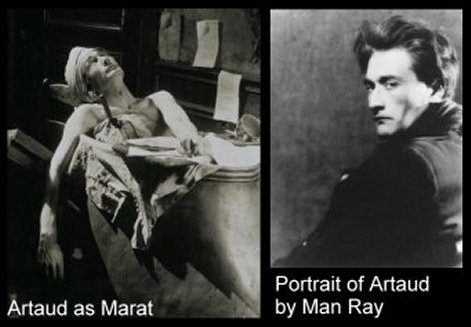
‘Dandies deck themselves out and stroll among the charnel-houses’ – Artaud. The Theatre and The Plague, a lecture given at the Sorbonne on April 6th, 1933 

Gothic Horror: La Danse Macabre of Guyot Marchant, Bosch, Sade, Maturin, Hoffmann (‘we have come to find this Olympia quite uncanny; we would like to have nothing to do with her...’), Poe. Matthew ‘Monk’ Lewis.... Et cetera, et cetera.

Fantastic hybrids, the clash of incompatible elements and the Ducassian Encounter. Dreams, superstition, madness, extremes, fantastic dislocations, chimaeras. The Disquieting Muses, Melmoth stands at the door (‘…and his features underwent a short but horrible convulsion.’). 

The Black Labyrinth: Noircissement and Cruelty 


Cruelty and Spectacle: ‘Out of these peculiarities, mysteries, contradictions and traits, we ought to be able to construct the essential features of a disease which saps the anatomy and life...we can deduce the dark, ultimate action of a spectacle...’ (Artaud: Theatre And The Plague)

Beyond nausea: ‘…this black labyrinth which lies, like a filthy copy of our daylight streets, far below their surface’ (Ostrovsky: Celine And His Vision, 1967) 

Politico-religious blasphemy, visceral expressionism:

Bacon, Grunewald, Goya, Lautreamont, Rimbaud: le Voyant, the radical derangement of the senses. Bacon, Burroughs (cut-up/fold-in). 

Ridicule and Corrosive Satire


Byron, Swift, Fuseli, Ensor, Goya, Jarry, Grosz.

Parody and burlesque. ‘The chief end I propose to myself… is to vex the world rather than divert it’ – Jonathan Swift: Letter to Alexander Pope, 29 September 1725. 

The Uncertainty Principle


I quote from Robert G. Cohn: 

Here we have reached the peak of Igitur’s effort via the absurde, i.e. paradox. In a final attempt to put a halt to the regress he has violently compressed the last-generated opposites by accepting a kind of compromise of madness (later folie utile), i.e. the last consciousness (willed- unwilled), and this is the absurde, or the mensonge (phenom­enon as fiction), and the realite dementie. Mallarme Igitur (1981)  

Or, to put it another way:

In the midst of the word he was trying to say,

In the midst of his laughter and glee,

He had softly and suddenly vanished away­

For the Snark was a Boojum, you see. 

Lewis Carroll. The Hunting of The Snark (1876) 

Uncertainty, Anxiety, Chance, Nonsense: post-determinism supersedes those old bogies: God, Heaven and Papal infallibility. For ‘snark’ read ‘quark’ throughout. The void of non-signification. El Manisero. 

TOTAL REPOSSESSION (NORMAL AND COUNTERNORMAL) 

Repossession of The Body


Re-integration with psychosomatic energy processes via psychophysical aesthetics and visceral expressionism. Austin Osman Spare: New Sexuality; Arthur Rimbaud: Nouvelle Amour; Andre Breton: Amour Fou, Hans Bellmer: The Unconscious Anatomy: L’Anatomie de l’Image, 1957. Fechner/Henry: Psychophysics. Decadence and Dissociation: hypersensitivity, perversity, reversion, very strange flowers. Subtextual automata, deathmasques,

Overthrow of Biological Tyranny. Neurological awareness and ‘unconscious scanning’ (Bacon). 

DESTROY          


·        indiscriminate conception

·        servility of parenthood

·        menstrual bondage

·        the Madonna syndrome

·        sexual normality

·        enforced ageing

·        the spiritual tyranny of death by the afterlife monopolies of the churches of the earth. 

Recovery of Cult-Power


Repossession of the Hieratic: dissolution and control of all so-called religious activities (the ‘mind-forged manacles’ of William Blake).

‘The Iguana girl spoke in her cool remote voice: “All religions are magical systems competing with other systems.”’ William S Burroughs. Cities of The Red Night (1981)

Recovery of symbols and fetishes; the power of ritual, of dramatic spectacle and mythic dramas in public and private life. Christians cannot monopolize the sign of the cross; socialists and communists have no special claim over the colour RED.
Requisition the manipulative techniques of politics and the sermon: restore them to the service of self-creation. You have only just begun to exist. Can you cope with Subtopia? Those things in fields? 

Hermeticism:  The Liberation of The Symbol 


Mallarme: patience, ALCHEMY, vocation, the void, transformation. Des pas sur la Neige.

The Crisis of the Object, the snowbound landscape. The season of the witch.

Death to all archetypes fossilized by centuries of vampirism by the churches of the earth. 

Reclaim the imagination!

Be incomprehensible!

Counternormality 


‘God – or myself – created all possible worlds, they coexist, but men can hardly glimpse even one.’              
Jarry: Ceasar-Antichrist (1895) 

Countermyths. Transfiguration of the personality. Melodrama, mime, double-entendre, Dada-cabaret, high and low fashion, urban blues. 

Ballard’s Crash. Modern myths and urban legends: close encounters with Unidentified Flying Objects. Nova Express. The Infernal Desire Machines. 

INFINITE INITIATION/CREATIVE PARANOIA 


Manipulate images in a synaesthetic illumination of hermetic analogy, inhabit the bodies of animals, converse with inanimate objects; incarnate the absurd in the light of the image. Personal magic, sigilization, nostalgia, modernity, involuntary memory. Surrealism: psychic automatism and the Automatic Muse. Charisma: Max Ernst, Marcel Duchamp, Federico Fellini, Ziggy Stardust. Prose libre. Midi-Minuit Fantastique…frisson of nude vampires in the films of Jean Rollin. Underground movies, Chinese Checkers, Chappaqua… Maya Deren, the Haunted Screen…the sinister somnambulist 

‘I treated my crab-lice with saltwater and seaweed, but a lot of nits must have survived’ – Samuel Beckett, The End, 1954

Winterbourne & Mortlake, 20-31 May, 1982