Showing posts with label Guerrilla Poetics. Show all posts

Monday, 2 September 2013

Second Highway I


..it is needful to trace a parallel road in the air, a second highway...

– Huysmans 


We are dispossessed, we are trapped in enchantment; it is called Normality. REVOLT?


DISENGAGEMENT & REPOSSESSION: THE EXORCISM OF THE NORMAL 


Attack is the best form of defence: all inherited categories of existence and society must be dissolved by the ultimate weapon: THE IMAGINATION. Will, generated by hate and disgust, is not enough, but fused with the creative matrix of the imagination it is invincible. ‘With a shudder, we cross what the occultists call dangerous territory’ – Andre Breton: Manifesto of Surrealism (1924) in Breton (1972) p40 

Repossess your mind/transform yourself. You are reality: you are the past and the future. 

AGAINST MYSTICISM 


Assert the sovereign necessity of self-creation against the self-annihilation of mysticism in all its form. Do not depart from this sacred mission: the destruction of worship.

Worship is the ultimate de-humanization of yourself. The fight against mysticism must be relentless; after it has been crushed ceaseless vigilance will be required to ensure the impotence of belief in all its forms: orthodox, esoteric, spiritual, political: the Nirvana Syndrome, the Curse Program Virus (Burroughs), the EP or the Emotional Plague (Reich). 

Repudiate all Platonic and NeoPlatonic doctrines, which seek to colonize the unconscious and even the symbol. Remain implacably against all magic and religion with elevated spiritual objectives, against all mystical dogmas of unification with others, with god, with society or Das Volk. Repudiate all metaphysical absolutes, meanings and purposes, all so-called ‘divine’ or ‘natural’ laws and interventions of ‘grace’. We must bring about the TOTAL DESTRUCTION OF WORSHIP, even self-worship. 

RADICAL DISENGAGEMENT 


The origin of Guerrilla Poetics:
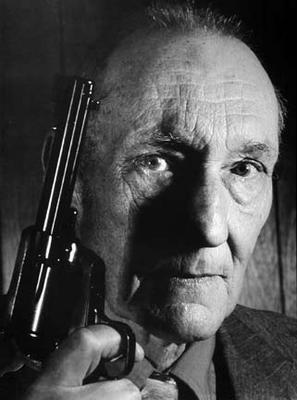
‘Our troops operate in the area of dream and myth under guerrilla conditions. This area is our cover...The enemy is a noncreative parasite.’ - William Burroughs, First Recordings  

Radical disengagement is the exorcism of the Normal, of Maya, of the evil enchantment – the world of ultimate illusion created by the black magic of the world power monopolies. Against Plato the fascist, against the denigration of reality as a reflection of a supra-sensible world that is only a moral fiction.

Dissociation of perception/creative vertigo, protoplasmic reversion, atavistic resurgence. Arthur Machen, H P Lovecraft (Cosmic Horror), Austin Spare. Breakthrough in plane, ‘outside the circles of time’ (Grant). Neo-shamanism. Urban alchemy. 

Objective Dissociation


Clinical dissection on all parties, cults, religions and beliefs. 

Clinical dissection of the mind.

Clinical dissection of yourself, the elimination of all parasitic accretions of thought, all Pavlovian worship-responses: behavioral conditioning that accepts the Nirvana Syndrome.

De-politicization will lead to total de-sacralization: Nothing is sacred: You have only just begun to exist!

Cultural Subversion: the Grotesque, Uncertainty and the Absurd


Continue the battles of our sacred ancestors who began to undermine the bastions of perception: 

Nihilism


Nihilism stands at the door: whence comes this uncanniest of all guests? – Nietzsche: Toward an Outline: The Will To Power 1 (1885-1886)  

Irony


Sterne, Baudelaire, Laforgue, Beckett, Warhol

The heroism of modern life, dandyism, bitterness; your heart laid bare. 

Objectivity


Poe (Ratiocination), Huysmans (Supernatural Realism), Duchamp.

Huysmans: ‘But it was likewise needful to sink a well-shaft into the soul’ 

Black Humour


Swift, Gay, Burroughs, Beckett, Breton. 

‘Where shall we find such another Set of practical Philosophers, who to man are above the fear of death?’ (John Gay, The Beggar’s Opera, Act II, Scene I, 1728)  

Beckett: ‘No, I regret nothing, all I regret is having been born, dying is such a long tiresome business I always found’ (From an Abandoned Work, 1957) 

Guignol


Alfred Jarry: ‘Please yourself, Pere Ubu but you’ll find yourself in the soup.’ 

The Grotesque &The Bizarre


‘If I am not grotesque I am nothing’ – Aubrey Beardsley.

‘The grotesque deepens life’s outward appearance to the point where it ceases to appear merely natural’ – Vsevolod E. Meyerhold 

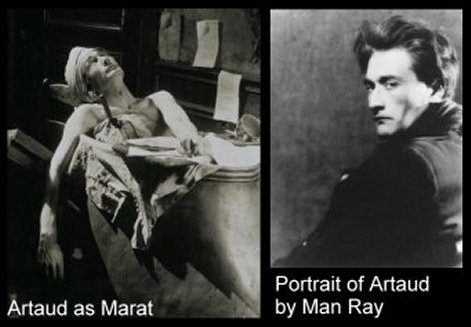
‘Dandies deck themselves out and stroll among the charnel-houses’ – Artaud. The Theatre and The Plague, a lecture given at the Sorbonne on April 6th, 1933 

Gothic Horror: La Danse Macabre of Guyot Marchant, Bosch, Sade, Maturin, Hoffmann (‘we have come to find this Olympia quite uncanny; we would like to have nothing to do with her...’), Poe. Matthew ‘Monk’ Lewis.... Et cetera, et cetera.

Fantastic hybrids, the clash of incompatible elements and the Ducassian Encounter. Dreams, superstition, madness, extremes, fantastic dislocations, chimaeras. The Disquieting Muses, Melmoth stands at the door (‘…and his features underwent a short but horrible convulsion.’). 

The Black Labyrinth: Noircissement and Cruelty 


Cruelty and Spectacle: ‘Out of these peculiarities, mysteries, contradictions and traits, we ought to be able to construct the essential features of a disease which saps the anatomy and life...we can deduce the dark, ultimate action of a spectacle...’ (Artaud: Theatre And The Plague)

Beyond nausea: ‘…this black labyrinth which lies, like a filthy copy of our daylight streets, far below their surface’ (Ostrovsky: Celine And His Vision, 1967) 

Politico-religious blasphemy, visceral expressionism:

Bacon, Grunewald, Goya, Lautreamont, Rimbaud: le Voyant, the radical derangement of the senses. Bacon, Burroughs (cut-up/fold-in). 

Ridicule and Corrosive Satire


Byron, Swift, Fuseli, Ensor, Goya, Jarry, Grosz.

Parody and burlesque. ‘The chief end I propose to myself… is to vex the world rather than divert it’ – Jonathan Swift: Letter to Alexander Pope, 29 September 1725. 

The Uncertainty Principle


I quote from Robert G. Cohn: 

Here we have reached the peak of Igitur’s effort via the absurde, i.e. paradox. In a final attempt to put a halt to the regress he has violently compressed the last-generated opposites by accepting a kind of compromise of madness (later folie utile), i.e. the last consciousness (willed- unwilled), and this is the absurde, or the mensonge (phenom­enon as fiction), and the realite dementie. Mallarme Igitur (1981)  

Or, to put it another way:

In the midst of the word he was trying to say,

In the midst of his laughter and glee,

He had softly and suddenly vanished away­

For the Snark was a Boojum, you see. 

Lewis Carroll. The Hunting of The Snark (1876) 

Uncertainty, Anxiety, Chance, Nonsense: post-determinism supersedes those old bogies: God, Heaven and Papal infallibility. For ‘snark’ read ‘quark’ throughout. The void of non-signification. El Manisero. 

TOTAL REPOSSESSION (NORMAL AND COUNTERNORMAL) 

Repossession of The Body


Re-integration with psychosomatic energy processes via psychophysical aesthetics and visceral expressionism. Austin Osman Spare: New Sexuality; Arthur Rimbaud: Nouvelle Amour; Andre Breton: Amour Fou, Hans Bellmer: The Unconscious Anatomy: L’Anatomie de l’Image, 1957. Fechner/Henry: Psychophysics. Decadence and Dissociation: hypersensitivity, perversity, reversion, very strange flowers. Subtextual automata, deathmasques,

Overthrow of Biological Tyranny. Neurological awareness and ‘unconscious scanning’ (Bacon). 

DESTROY          


·        indiscriminate conception

·        servility of parenthood

·        menstrual bondage

·        the Madonna syndrome

·        sexual normality

·        enforced ageing

·        the spiritual tyranny of death by the afterlife monopolies of the churches of the earth. 

Recovery of Cult-Power


Repossession of the Hieratic: dissolution and control of all so-called religious activities (the ‘mind-forged manacles’ of William Blake).

‘The Iguana girl spoke in her cool remote voice: “All religions are magical systems competing with other systems.”’ William S Burroughs. Cities of The Red Night (1981)

Recovery of symbols and fetishes; the power of ritual, of dramatic spectacle and mythic dramas in public and private life. Christians cannot monopolize the sign of the cross; socialists and communists have no special claim over the colour RED.
Requisition the manipulative techniques of politics and the sermon: restore them to the service of self-creation. You have only just begun to exist. Can you cope with Subtopia? Those things in fields? 

Hermeticism:  The Liberation of The Symbol 


Mallarme: patience, ALCHEMY, vocation, the void, transformation. Des pas sur la Neige.

The Crisis of the Object, the snowbound landscape. The season of the witch.

Death to all archetypes fossilized by centuries of vampirism by the churches of the earth. 

Reclaim the imagination!

Be incomprehensible!

Counternormality 


‘God – or myself – created all possible worlds, they coexist, but men can hardly glimpse even one.’              
Jarry: Ceasar-Antichrist (1895) 

Countermyths. Transfiguration of the personality. Melodrama, mime, double-entendre, Dada-cabaret, high and low fashion, urban blues. 

Ballard’s Crash. Modern myths and urban legends: close encounters with Unidentified Flying Objects. Nova Express. The Infernal Desire Machines. 

INFINITE INITIATION/CREATIVE PARANOIA 


Manipulate images in a synaesthetic illumination of hermetic analogy, inhabit the bodies of animals, converse with inanimate objects; incarnate the absurd in the light of the image. Personal magic, sigilization, nostalgia, modernity, involuntary memory. Surrealism: psychic automatism and the Automatic Muse. Charisma: Max Ernst, Marcel Duchamp, Federico Fellini, Ziggy Stardust. Prose libre. Midi-Minuit Fantastique…frisson of nude vampires in the films of Jean Rollin. Underground movies, Chinese Checkers, Chappaqua… Maya Deren, the Haunted Screen…the sinister somnambulist 

‘I treated my crab-lice with saltwater and seaweed, but a lot of nits must have survived’ – Samuel Beckett, The End, 1954

Winterbourne & Mortlake, 20-31 May, 1982

Friday, 30 November 2012

Poets Must Be Vigilant


Poetic Censorship 4th Annual Poetry Library Open Day 18 November 2012


Given the current debate over issues of self-expression amplified by the increasingly febrile atmosphere surrounding the Leveson press standards inquiry and talk of reforming The Public Order Act – legislation widely seen as encouraging a ‘creeping culture of censoriousness’ – this open day was a timely event.

Poetic Censorship highlighted a history of literary controversies arranged in chronological order with AV facilities included for the particularly adventurous visitor. Preceded by a display of New Acquisitions and a some Staff Picks, the exhibition, in St Paul’s Pavilion on Level 6 of the Royal Festival Hall, Southbank Centre, was organised into a further twelve sections. These ranged from the Imagists and Futurists to the New Narrative movement via exhibits illustrating Children’s Protests and Self-Censorship. Precise textual notes giving background information and generally useful facts accompanied each display.

The central display was devoted to English PEN; an organisation promoting the principle that Freedom of Expression, ‘the freedom to write and the freedom to read’, is a universal right. Here were displayed copies of the recent publication Catechism: Poems for Pussy Riot an international poetry collection (edited by Mark Burnhope, Sarah Crewe and Sophie Mayer) published to rally support in the run up to the appeal hearing of October 2012. There were also flyers drawing attention the Syrian poet and blogger Tal Al-Mallouhi who was arrested in 2009 at the age of 19 and is, sadly, still in detention.

These contemporary cases were contextualised by displays showcasing Manifestos, Censored Magazines, the ‘Education For Leisure’ scandal of 2008, examples of children’s protest statements (both these latter under the heading Poetry On The Curriculum) and instances of censored poets who participated in the 2012 Poetry Parnassus. One of the more disturbing sections was devoted to the concept of self-censorship with examples of publications by Rosemary Tonks, Lynette Roberts and J H Prynne who rejected all, or some, of their own work either for moral, religious or aesthetic reasons. This was followed by a display covering Contemporary Polemics, with items by the New War Poets protesting against the conflicts in Iraq and Afghanistan. There was also a section exploring techniques of DIY zine-making under the heading A Piece of A4; do it yourself production and distribution being the only option for controversial writers living in totalitarian states. The final display was devoted to the Henningham Family Press, who have created a special typeface for the piece ‘An Unknown Soldier’; an elegy for the First World War, here shown in various physical formats.

Unusual and historic exhibits included manifestos by Marinetti and Apollinaire, Hugo Ball’s Dada Diary, editions of Blast and the Neoist Manifestos. Books from the library collection included rarely-seen items by Mayakovsky, Bukowski and the Chinese Misty Poets group (lyrical poets whose works ran counter to ethos of the Cultural Revolution) and a further intriguing selection called Poems from Unexpected Political Sources. This display comprised volumes by Enoch Powell, Ho Chi Minh, Chairman Mao, Donald Rumsfeldt (yes, really) and Maze Prison hunger-striker Bobby Sands, among others. The Censored Magazines on display were of particular interest. These included Poetmeat Twelve, The Outsider, Intrepid (ed. Diane Di Prima) and some examples of the broadsheet-poster-flyer Guerrilla from NYC (1968) billed as the ‘Free Newspaper of The Streets’, edited by Allen Van Newkirk who became a founder of the White Panthers. Guerrilla carried inflammatory verses by Black Nationalist LeRoi Jones who was subsequently arrested and imprisoned. Also there was a rare copy of seminal 70s small press mag Curtains (ed. Paul Buck) initially rejected for financial support on the grounds that its contents were ‘too French’. Rejection or censorship, when not driven by fear of overt political subversion often revolves around xenophobia or a phobic horror of sexual content. This latter point illustrated by the inclusion of ‘salacious underground poems’ by W H Auden and the well-known quote from Kathy Acker about the label New Narrative: ‘Why can’t we just call it sex?’

The publicity for Poetic Censorship features a photo of Osip Mandelstam taken by the NKVD after his arrest in 1938. Previously apprehended for his satirical poem ‘Stalin Epigram’, which poked savage humour at the Stalinist terror machine and Stalin himself, Mandelstam wryly noted that ‘Only in Russia is poetry respected, it gets people killed.’ It is intrinsic to the doublethink of censorship that freedom of expression can so easily be defined as ‘counter-revolutionary’. Here, in the UK, writers are lucky, compared to the situation of authors elsewhere, as can be seen by the case of Tal Al-Mallouhi. But this Poetry Library open day exhibition served as a reminder that, in certain circumstances, the idea of destroying poems which contradict the official line can quickly re-surface; a tactic recommended in 2008 by the AQA when it removed Carol Ann Duffy’s poem ‘Education For Leisure’ from the syllabus. Opponents of Section 5 of the Public Order Act, 1986 have warned against the ‘outrage industry’ that has become a depressing fact of public life over the last two decades; poets must be vigilant.

The Saison Poetry Library is situated at Level 5, Royal Festival Hall, Belvedere Road, London SE1 8XX Visit the Poetry Library online at poetrylibrary.org.uk. To find out more about English PEN and membership details visit englishpen.org. Poetic Censorship was supported by Arts Council England.


Sunday, 21 October 2012

Neon Highway 23 Autumn 2012

Sometimes we can see that realty is often surreal in itself.


If there is a guiding – but tenuous – idea informing this ‘Surreality of Now’ issue of Neon Highway, it might well be that somewhat incongruous slant on life as we know it or, rather, as we should know it: realty is often surreal in itself.

It is all a matter of sensibility; from the Place Pigalle, haunted by the presence of George Melly, to the far Northwest shores of Seattle, Washington, via Jumbo Records in Leeds, or the geological enigmas of the quasi-industrial Sierra Minera, the contents on this issue disclose a ‘topography of the imagination’ infused by diverse states of mind; some cool and impersonal, others angry or experimental, dissonant or melodic, sensual or abrasive: guerrilla prose, compressed anti-poetry, shamanistic or hermetic mysteries of self and other, Beat-pop vignettes, verbal snapshots of the fleeting, wayside phenomena of the everyday.

These are the preoccupations of a unique selection of contributors, whose images and texts we are delighted to present to our readers for this special Autumn 2012 edition: Andrew Darlington, Fiona Pitt-Kethley, Michael Woods, Rupert M Loydell, Marie Zorn, Wednesday Kennedy, Aad de Gids, Lorraine Mariner, Roy Sutirtha, MJ Foster, Alicia Winski.

Neon Highway is edited by Jane Marsh and Alice Lenkiewicz. Neon Highway was set up in 2002 as a non-profit making little poetry/arts magazine

Dear readers,
I have begun a new series of Neon Highway issues that are to be edited by guest poets. I thought this would be an interesting idea to celebrate the variety of editors and their interests and poets of choice. Our first guest editor is A C Evans. I pass you over to AC to introduce this issue.

Yes, thank you Jane! And, without further delay we can meet our contributors to this ‘surreality of now’ edition of Neon Highway…. Unidentified flying poet Andrew Darlington is author of Euroshima Mon Amour (2001), a collection of SF poems enthusiastically reviewed as ‘poetry from a twisted mind’ by NME. A visionary novel Beast of The Coming Darkness is currently hunting a publisher; then there are reviews, interviews and fiction sales to hosts of UK and international anthologies and magazines. A live performance video (Five Leaves Left) and records (as part of the U.V. Pop Electronic group) have also appeared, and probably been deleted! Andy’s spoken about how any vague potential for academic success ‘got terminally wrecked by teenage addictions to loud Rock ‘n’ Roll and cheap Science Fiction’. Aad de Gids has a straight twin brother Bas, while he himself is gay. We’re from the ‘anti-generation’, Aad tells Neon Highway, ‘a bit punkish’. Bas is the imagist; the sharp eye for imagist distortions of a distorted society. Our aesthetics have always been anti-theatre, anti-poetry, anti-cinema = experimental, neomusic, nonmusic, muzak, the ‘die-collector-scum’ aesthetics, dada, postneodada. All that is new, strange, decoding all codes, societal, sexual, natural, literal, philosophical, transdimensional; this, we try to do. ‘We have thousand personalities now and, it shows’. M J Foster is a writer, poet and the founding editor of Inclement Poetry Magazine (est. 2000). Her work has been published in Still, Iota, Exile, First Impressions, Poetic Licence, Breathe, Candelabrum and Amber Silhouettes. Her short story, 'The Willow' was shortlisted for the Myslexia Women's Short Story Prize 2012. She graduated with a first class BA (Hons.) in Writing from Anglia Ruskin University, Cambridge. She is often mistaken for Beyoncé by absolutely no-one and has a long-running battle with a squirrel with a grudge. Wednesday Kennedy has lived and worked internationally as a writer and performer in theatre, cabaret, television, radio and print media. ‘Always experimenting, working with sound artists, musicians, dancers, film makers, actors, honing her craft and creating her body of work… surfing into every scene like a gate-crasher’. Post Romantic, her 1999 CD, prefigured performances at The Edinburgh Fringe, and beyond. She has also written One Woman Shows for other performers, including Intimate and Deadly for Christine Anu and recently released her magical realist memoir 21st Century Showgirl, ‘an all-girls adventure epic about being a One Woman Show in a Brave New World’. Rupert M Loydell is Snr Lecturer in English with Creative Writing at University College Falmouth, and editor of Stride and With magazines. He is the author of several collections of poetry, including the recent Wildlife and A Music Box of Snakes, co-authored with Peter Gillies. He edited From Hepworth's Garden Out poems about painters and St. Ives and Troubles Swapped for Something Fresh, an anthology of manifestos and unmanifestos. He lives in a creek-side village with his family and far too many CDs and books. Lorraine Mariner was born in 1974, grew up in Upminster and attended Huddersfield University arinerwhere she read English, and then University College London, where she read Library and Information Studies. Her pamphlet Bye For Now was published in 2005. In the same year she also received an Arts Council Writer's Award and in 2007 her poem ‘Thursday’ was shortlisted for the Forward Prize for best individual poem. ‘Her gift is to reveal how much of the everyday is purely surreal and to articulate the strange and fleeting thoughts we often have, but rarely have the nerve or quick-wittedness to voice’. Lorraine Mariner’s Furniture was published in 2009 and shortlisted for the Forward Prize for Best First Collection. Fiona Pitt-Kethley studied at the Chelsea School of Art where she obtained a BA (Hons.) before going on to become a full-time writer. As a student she ushered at the Old Vic and National Theatre and while writing sometimes worked as a film extra. Now living in Cartagena, Spain, Fiona has acquired new hobbies and has adopted seven feral cats. She goes rock-hunting and hill-walking in the Sierra Minera and is currently writing a book on its history. Her Selected Poems was published in 2008 and includes work from her notorious 1986 collection, Sky Ray Lolly. Alicia Winski was born in Los Angeles and has been hailed as ‘a fierce poetic voice, spreading her wings across the West Coast’. With an impressive following in both LA & Seattle, she is ‘a provocative figure on page, online and on stage’. She is author of Running on Fumes and works at Edgar and Lenore's Publishing House (Editor, Seattle division). Alicia possesses a craft that is ‘melodic, brutally honest and oftentimes, quite sultry’. Her words encompass strength, courage and a passionate perspective on life and love as seen through the eyes of a poet. She is currently working on her next collection, Naughty Girls Dream in Color, which is anticipated to be released in 2012. Michael Woods is a surrealist consultant, writer and experimental filmmaker. Expert in special photography and effects in all media he is experienced in publicity, poster design, digital work, prop photography and vintage prints. Also, he is joint author with George Melly of Paris and The Surrealists (1990). Work in progress includes: constructing and editing a film version of the stage play Ajax, (2011) with Jack Shepherd, and The Distorted Self – Schizophrenia, an experimental film with Eliot Albers. Soho and Elsewhere: an exhibition of photographs 1979-90 (2012) and Portobello Eye (with Michael Horovitz) explore the ‘topography of the imagination.’ And, finally, Marie Zorn is our ‘eternal wanderer questioning the ambiguities of desire, the wonders and the mysteries of the Self and the Other, the thinking body… the body that we both are and have’. When asked about her work Marie says: there is a Paul Klee painting entitled ‘Beginning of a Poem’, in which the painter offers these words as a riddle... ‘so fang es heimlich an’ (caught it on secretly.) ‘Should there exist’ she asks, ‘other reasons to write than to steal and hide, to chase elusiveness of emotions and conceal them in beauty, crafting amulets to protect ourselves from their tearing power?’

Neon Highway Avant-garde Literary journal PUBLISHES: POETRY and ART

Neon Highway Poetry Magazine ISSN: 1476-9867

Neon Highway is available bi-annually, with 2 issues costing £5.50, or a single Issue available at £3.00. Order your next issue by sending a cheque made out to Alice Lenkiewicz at 37, Grinshill Close, Liverpool, L8 8LD

Submissions to be sent to the editor:

Alice Lenkiewicz: 37, Grinshill Close, Liverpool, L8 8LD

Email submissions can be sent to: neonhighwaypoetry@yahoo.co.uk

Or send via snail-mail to address above. Please always supply a sae for any returned material. Please put your name and address on your poems.

Please be patient on replies.

If you do not hear about your work within eight weeks, do feel free to contact the editor.

If you would like to write a review for this magazine or if you would be interested in being interviewed by assistant editor, Jane Marsh, please contact us on the email above.

We do encourage you to subscribe.

We are grateful to all the subscribers who have kept Neon Highway in print over the years.


Illustration: Untitled photo [detail] by Michael Woods (c) MichaelWoods

Thursday, 20 September 2007

Convulsion Revisited

It might be the case that the idea of Convulsion as a guiding principle arose during a rambling discussion triggered by a short, passing reference to the topic in Patrick Waldberg’s book Surrealism (1965). There may be those who recall taking part in such a discussion in 1967 and who may even remember the very place in Chelmsford where we met – a coffee bar in Duke Street opposite the Civic Centre and Public Library – the last time I looked it was still there. There may also be some who, even today, might recall how, in a crowded, smoky hostelry next to the railway station, the more formal notion of a BCI (Bureau of Convulsive Inquiries, or was it Investigations?) was mooted. Some might claim that such a thing actually existed – on paper at least.
And yet I recall most vividly that it was, in fact, in Villiers Street, near Charing Cross, in a restaurant long since vanished (there was shadowy corner lined with fake books) that the suggestion of a Convulsionist Group was proposed for the very first time. I only wish I could remember the name of the place, but I expect it was a Golden Egg, as the interior decor was elaborate and colourful. We can all agree, I think, that Convulsionism emerged in 1967 for the simple reason that the poem ‘Birth of Convulsion’ dates from that year and no earlier testimonials survive: for a very few the Summer of Love was also the Summer of Convulsion.
It was late afternoon when, walking towards Villiers Street, through the Victoria Embankment Gardens, I came across that embodiment of the Convulsive Aesthetic, or one sharply defined facet of such an aesthetic: the Sullivan Memorial by W. Goscombe John. It was ‘the mourning girl’; an allegory of music grieving for a dead composer that, at that epiphanic moment, caused a veritable frisson of the imagination. This mild shock evoked in turn a quotation from Rider Haggard’s She, which I am very sure read as follows:

…with a convulsive movement that somehow gave the impression of a despairing energy, the woman rose to her feet and cast the dark cloak from her.


It was natural that I then recalled the famous passage from Against Nature where Huysmans decibes Salome's gesture in Gustave Moreau's watercolour The Apparation:

with a gesture of horror, Salome tries to thrust away the terrifying vision which holds her nailed to the spot, balanced on the tips of her toes, her eyes dilated, her right hand clawing convulsively at her throat..


By word association I next recalled an amusing anecdote recounted in a book on Art Nouveau by John Russell Taylor which recorded how, when Burne-Jones admitted that he wished he had seen Blake’s Behemoth as a teenager, a friend exclaimed "My dear, you would have been carried off in convulsions!"
Obsessed with Decadence, I felt the sensual ‘wave-line’ of Art Nouveau, the frisson a l’unison of the ‘Cantique de Saint Jean,’ and certain details of Beardsley’s Salome drawings exemplified the notion of a Convulsive force in a manner that complimented Breton’s eloge du cristal, or Dali’s ‘The Phenomenon of Ecsasty’. Eine linie ist eine Kraft (‘a line is a force’) wrote Henry van de Velde in some forgotten artistic treatise published in the fin de siecle era. Here, I thought, was a kind of continuity, linking the ‘magnetic force’ of Rider Haggard’s awesome Queen of Kor with the Surrealist principle of Convulsive Beauty via the sinuous, ectoplasmic wave forms of Art Nouveau and the galvanic posture of an allegory of music as sculpted for the memorial before me. It was the birth of Convulsion from an allegory of music.
There were others that evening who, because they despised Dali, and for other reasons, argued that Ernst's ‘The Eye of Silence’ (currently on the cover of Ballard’s The Crystal World) and ‘The Robing of the Bride’ epitomised the true spirit of present day Convulsion in art. Together with the ‘secret festivals’ of Leonor Fini and the multiple perspectives of the ‘unconscious anatomy’ described by Hans Bellmer, it was, in the final analysis, Max Ernst who was the guiding light on our quest to become cartographers of 'inner space'. Notwithstanding the still-living presence of Elizabeth Siddal, who seemed, for at least one of us, a more than fleeting presence, Gothic Convulsion in art was exemplified by Rossetti’s absolutely uncanny ‘How They Met Themselves’ (his ‘bogey picture’) while some, even more ambitious, claimed Crivelli, Goya and even Leonardo (think of his crumbling, oracular wall), as precursors.
Yet another asserted the importance of the echoing spaces and voids depicted in Messiaen’s Et Exspecto Resurrectionem Mortuorum (this, despite the anti-clericalism of Convulsion), or the tortured, Expressionist sprechstimme of Pierrot Lunaire, to show that Convulsion pervades the universe of music. Convulsion in music certainly existed, it was said, despite the intentions of composers who were, as we knew, often behind the times. Of course the ‘Liebestod’ from Tristan was always cited in such conversations together with some works by Varese and Bartok, while on other occasions, it was permissible to assert that ‘classical’ music (whatever that was) was no longer ‘it’. Quite rightly, to ‘get Convulsion now’, you should listen to ‘Rocket 69’ by Connie Allen, or The Doors’ ‘Horse Latitudes’/ ‘Moonlight Drive’/ ‘People Are Strange’ – well the whole album actually. Jimi Hendrix and his Experience was certainly Convulsive among the ladies, so were Tropicalia, Brian Auger and anything by Charles Mingus, but especially ‘Ysabel’s Table Dance’ from Tijuana Moods.
Above all, I thought of Wifredo Lam’s hieratic and sinister Altar for La Chevelure de Falmer exhibited in 1947 but not illustrated in Waldberg’s book, and certain images from a television programme called The Debussy Film (1965). It was an unquestioned axiom of dogma, a basic tenet of theory, that every utterance and written word by Antonin Artaud was ‘intrinsically Convulsive’ and ditto Marcel Duchamp. The same was true of every move and gesture by Conrad Veidt in the (‘totally Convulsive’) role of Cesare the Somnambulist or, more obscurely, as the eponymous student in The Student of Prague.
But of course, wishing, for obvious reasons, to elevate some film star or super-model to iconic status, most of us, inspired by The Phantom Of Sex Appeal, undoubtedly defined Convulsive Beauty in the context of ‘the internal (or, sometimes, ‘infernal’) feminine’. Candidates for this iconic role would include Charlotte Rampling for her portrayal of the doomed Elizabeth Thallman in Visconti’s The Damned (1968) or – very seriously – Fenella Fielding; and not just for her appearance as Valeria Watt in Carry On Screaming (1966). There was a positive mania for this kind of nomination with candidates ranging from Louise Brooks to Elsa Lanchester, Veronica Lake, Barbara Steele, Verushka, Jean Shrimpton, (not Twiggy) and Catherine Deneuve. One image, of the model Donyale Luna in Qui etes-vous Polly Maggoo?, became the ultimate icon, although a ‘Convulsive moment’ from Fortunata’s dance (Magali Noel in Fellini Satyricon) was also a close contender. At that time I had not seen a film called The Flesh and the Fiends or, without hesitation, I would have added the names of Billie Whitelaw to the list.
From very different perspectives there were other modes of Convulsion, including Lyrical Convulsion which was a style of ultra-decadent ‘Yellow Nineties’ poetry influenced by the naturalism of Arthur Symons, and Hermetic Convulsion requiring a knowledge of Alchemy but exclusively ‘under the poetic angle’. There were Convulsive Objects (instamatic cameras, cash machines, dictaphones, car stereos, audiocassette players), and Convulsive Places and Buildings (The Hellfire Caves, Museum Street, Centre Point, The Post Office Tower, Liverpool Street Station and Hungerford Bridge among others). Macabre Convulsion drew inspiration from Mervyn Peake's Fuschia Groan, Edgar Allan Poe and Maturin’s Melmoth the Wanderer, while Absurd Convulsion was definitely both Pataphysical (Faustroll, Ubu Roi) and contemporary – as in the ‘Convulsively funny’ dinner party from Carry On Up the Khyber (1968). Radio 1 was definitely not Convulsive at all, and neither was The Liverpool Scene. The Gernreich topless dress was Convulsive but Post-Painterly Abstraction was not – well, not usually. William Burroughs was ‘in’ but Jack Kerouac was ‘out’… and what about Union Jack sunglasses, and all those sort of things? Well, no, not particularly, even though floral or Op Art ties were sometimes worn to Convulsive parties or gatherings at Le Macabre, a coffee house in Meard Street, or the sordid wine-cellar of Dirty Dicks on Bishopsgate. While writing practice was often 'under guerrilla conditions' (cut-ups inspired by Nova Express), the ideal Convulsive fashion style avoided blue jeans and aspired to attain an Essex Exi-gangster look, via Warhol and the Velvet Underground.

An amalgam of Surrealism and Decadence with an element of the Mod-Pop axis mixed with pure fantasy, Convulsionism valued the imagination and automatism above everything – the ideal Convulsive 'moment' is always inadvertent. In their book Surrealism: Permanent Revelation (1970) Cardinal & Short said correctly:

Surrealism has established its own ‘aesthetics’ by defining beauty in terms of a purely affective response to phenomena.

That this ‘excitation of the nerves’ as Angela Carter defined the concept sometime later, was in fact an extension into the mid-twentieth century of the Decadent idea of the frisson nouveau or crise de nerfs was the clever but not necessarily original basis for the Convulsionist aesthetic. It was an aesthetic that flourished obscurely during the era known by some as 'that decade of convulsion', but, more specifically, The Swinging Sixties, and which, in the long term, I suspect influenced no one but myself.

Illustration: Cantique de St Jean, 1968